The World
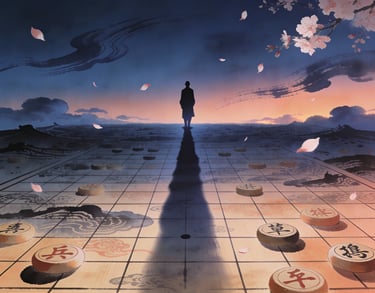
The realm of Spiritfang exists in permanent twilight between the living world and the spirit plane — three hundred years after the Great Shogun sold his soul for victory in a war he won, and the God of Fate never left. Yokai corruption spreads across nine clan territories. Kami hunt anomalies. And somewhere in the middle: a traveling theater company moves from city to city, performing for whoever will pay, hiding one very specific secret inside the costume trunk.
THE SAMURAI MASTERS
"Where blade meets duty, there is no room for hesitation."
Three hundred years ago, when the Great Shogun made his pact with the God of Fate, it was the Samurai Masters who stood at the gates of the spirit realm and refused to kneel. They paid in blood. They paid in sons. And when the smoke cleared and the gods retreated — they were still standing.
The Samurai Masters are not warriors by birth. They are warriors by choice, repeated every single morning, when they rise before dawn, oil their blades, and swear the same oath their fathers swore. Honour is not a concept to them. It is architecture. It is the reason walls don't fall.
Their codes are strict: no deception, no retreat without cause, no blade drawn in anger. But those who mistake discipline for weakness have never faced a samurai lord with nothing left to lose. Under their black-lacquered armour and silk battle standards, they carry the weight of a nation's memory — every name of every soldier who died honourably. They do not fight for glory. They fight so the dead are not forgotten.
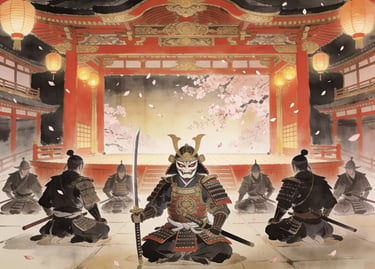
In the game: The Samurai Masters reward patience and preparation. Stack equipment on your warriors, set powerful traps like Tale of 47 Ronin, and control the battlefield with honoured commanders who rally your forces when the moment counts.
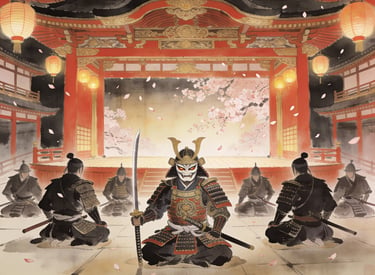
Tale of 47 Ronin
The defining card of Samurai honour. Set it early, and let the legend do the work.
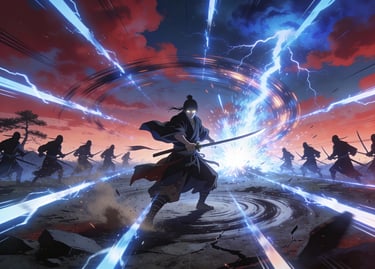
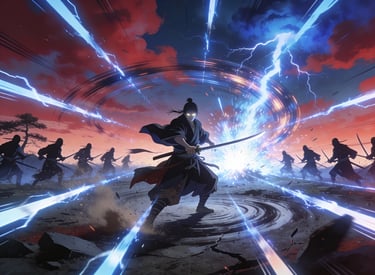
Ten-Phantasm Rift Blade
A mythical sword strike through ten dimensions. The ultimate Samurai offensive play.
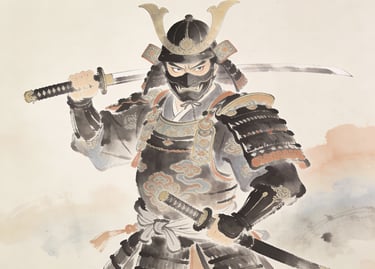
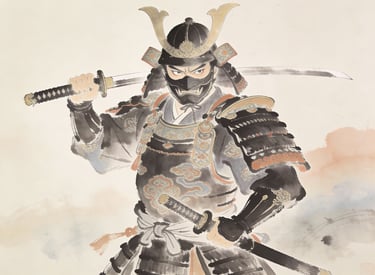
Ashigaru of the Rising Banner
The backbone of every Samurai deck. Humble in rank, unbreakable in resolve.
THE FANG CLAN
"A lone wolf survives. A pack rewrites history."
Three hundred years ago, when the Great Shogun made his pact with the God of Fate, it was the Samurai Masters who stood at the gates of the spirit realm and refused to kneel. They paid in blood. They paid in sons. And when the smoke cleared and the gods retreated — they were still standing.
Deep in the haunted forests beyond the Iron Moon mountains, where even the kami walk softly, the Okami have always run. They did not build cities. They did not sign treaties. When the corruption came and the other clans fortified their walls, the Okami scattered into the shadows of the wilderness — and multiplied.
They are not mindless beasts. The Okami are a people who chose the wolf as their truth: that strength shared grows faster than strength hoarded. Every wolf in the pack carries a fragment of the whole. When one howls, all of them hear it. When one falls, all of them feel it.
Their spiritual art — the Wolf Aura — is unlike any other technique in Spiritfang. It does not empower the individual. It breathes through the pack itself, each wolf's presence sharpening the fangs of every wolf beside them. Face one Okami warrior alone and you face a capable fighter. Face the whole pack assembled and you face something older than tactics — instinct made divine.
Tokugawa's Fang leads the charge at the frontlines. Oda's Fang commands from the shadows. And beneath the Devouring Wilds, where roots remember names, the pack waits to be called.
In the game: The Okami Pack is a snowball faction. Build your pack early, protect it from removal, and watch the Wolf Aura stack ATK until the board becomes unstoppable. Wolves reward consistent assembly over individual card power.
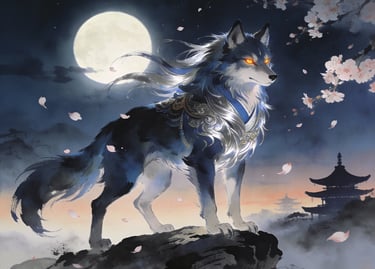
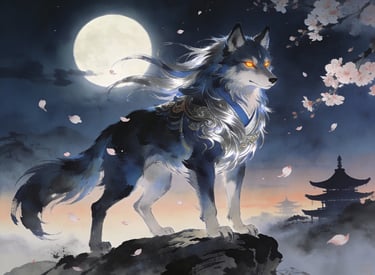
Tokugawa's Fang
The frontline enforcer. Buffed alongside every wolf you play.
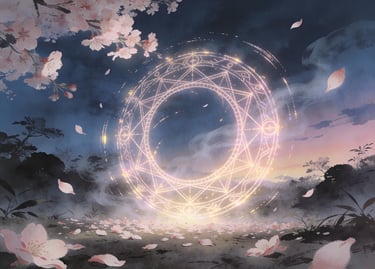
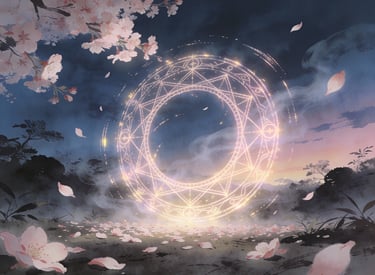
Wolf Summon Rite
The ritual that calls the pack. An essential combo enabler.
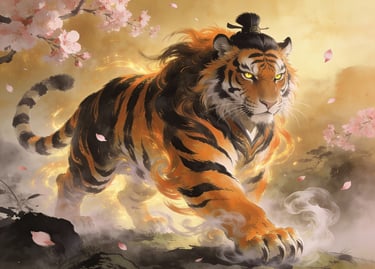
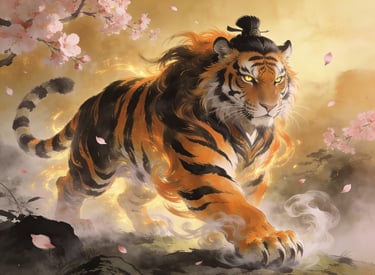
Oda's Fang
The alpha. When Oda arrives, the pack's power is already stacked and waiting.
THE YOKAI REALM
"They were here before the first shrine was built. They will be here when the last one falls."
The Yokai do not invade. They return.
This land belonged to them before the humans named it. Before the first rice field, before the first temple, before the Great Shogun's fatal bargain tore the boundary between worlds — the Yokai existed here in the old dark, in the mist between heartbeats, in the silence behind the waterfall. They remember what humanity chose to forget.
Now the rift is open. Now the corruption spreads. And the Yokai walk freely through the nine territories, wearing their ancient faces without apology: the wall that turns travelers to despair; the woman whose neck spirals like silk in the night wind; the great spider who weaves riddles stronger than steel; the dragon-serpent who carries thunder in its coils.
They are not evil. They are old. And old things have patience that humans have no framework to measure. The Oni of the Crimson Horns does not hurry. The shadow techniques — paralysis, silence, obliteration — are not cruelty. They are consequence. Everything you did to earn this moment.
In the game: Yokai is the premier control faction. Freeze threats with ice spells, paralyse the board with Shadow Paralysis, then erase everything with Shadow Destruction. The Gate of the Forbidden Abyss can swing any game mid-swing
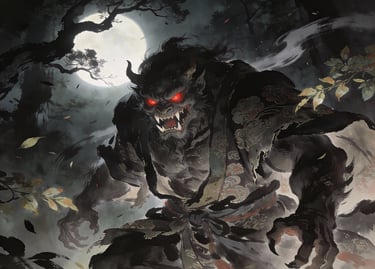
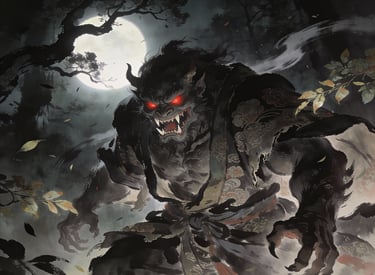
Oni of the Crimson Horns
The largest raw-stat creature in the game. An unanswerable wall of fury.
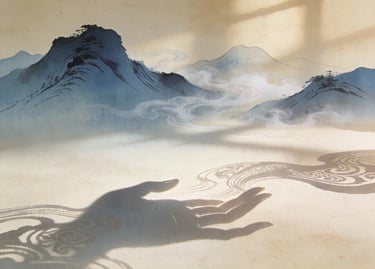
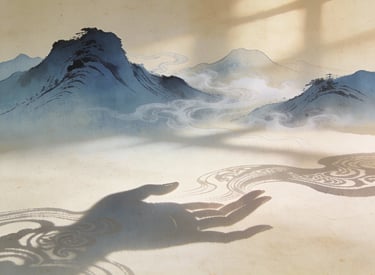
Shadow Destruction
Destroys all paralysed units. Pair with Shadow Paralysis for a full board wipe.
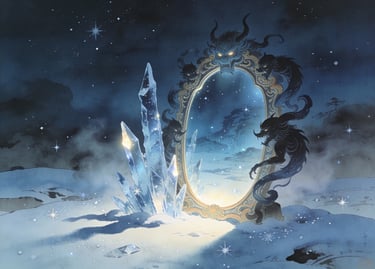
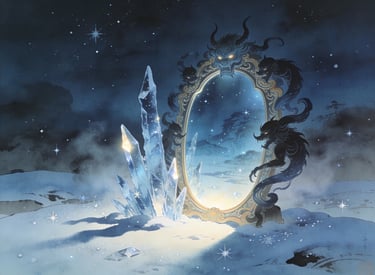
Gate of the Forbidden Abyss
Tears the realm open and summons what waits on the other side.
THE SPIRIT BEASTS
"We were not given these forms. We earned them."
Three hundred years ago, when the Great Shogun made his pact with the God of Fate, it was the Samurai Masters who stood at the gates of the spirit realm and refused to kneel. They paid in blood. They paid in sons. And when the smoke cleared and the gods retreated — they were still standing.
The Spirit Beasts of Hinokabe are what happens when nature itself decides to fight back.
Once, the forests and mountains and rivers had guardians — half-spirit, half-creature — who maintained the ancient balance between the living world and the unseen one. When the Great Shogun's bargain poisoned that balance, many of those guardians were shattered, their forms fractured into the creatures you see today: fox-sorcerers who remember godhood, gecko warriors who stalk moonlit walls, bears who carry the weight of mountains in a single push.
They are not a clan in the political sense. They are what survived. Each of them carries a Ninjitsu technique — not learned from scrolls, but remembered from before the world had scrolls. The Arcane Flame Fox casts fire not because he was trained to, but because fire was always inside him, waiting for a reason. The Unmoving Shadow does not move because he has already arrived.
Their greatest strategist is the Fox of a Thousand Strategies — a creature who sees the battlefield as a living shogi board, who has already played every possible game to its conclusion before the first piece moves. When he Silences an opponent's abilities, it is not a trick. It is a closed door on a room that was already empty.
In the game: Spirit Beasts are a flexible mid-range clan. Versatile Ninjitsu access lets you adapt your spells to any situation, while the Fox of a Thousand Strategies shuts down opponents who rely on activated abilities.
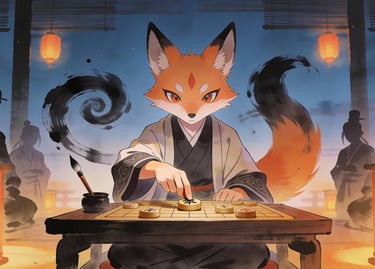
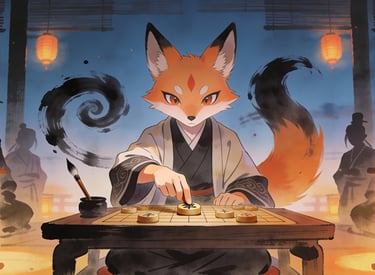
Fox of a Thousand Strategies
Silence + Chess Move. The clan's premier control anchor.
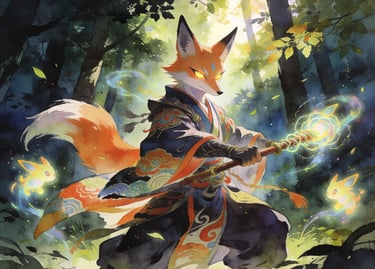
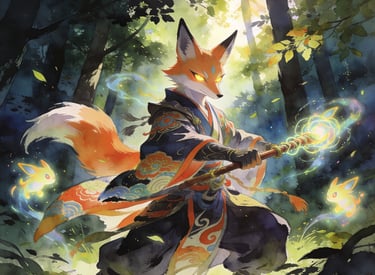
Arcane Flame Fox
A trickster with fire in his blood and spirit music in his staff.
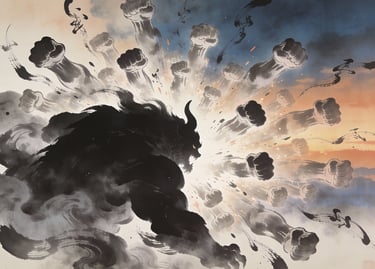
Fire Fist of the Shattering Gale
The ultimate expression of Hinokabe's elemental fury.
THE ZEN CIRCLE
"Victory is not a moment. It is a shape. And I have already drawn it."
There are warriors who fight. There are warriors who plan. And then there are the masters of the Zen Circle, who understand that fighting and planning are both just noise — that the battle is already decided before either side draws a weapon, and that all one needs to do is see clearly enough to know which shape the silence takes.
The Zen Circle emerged from the mountain monasteries that survived the Great Shogun's era by simply refusing to be interesting. Invisible to politics. Invisible to war. Their monks watched civilisations tear each other apart, made careful notes, and continued their studies. When the yokai came, the other clans raised armies. The Zen Circle built the Checkmate.
Their techniques read like chess: the Four Knights Game, the Siberian Trap, the Queen's Gambit — each one a framework for reshaping the opponent's choices until there are no choices left. They do not destroy. They make destruction inevitable and then wait politely for the opponent to perform it themselves. Their traps do not need to be armed. They need to be understood.
The Prodigy of Impossible Solutions is their most visible face — a child whose mind moves faster than adults dare to follow. But the true power of the Circle is older and quieter: the Zen Master who teaches by revealing, the Sanctum of the Unmoving Heart where doubt cannot enter.
In the game: Zen is a trap-and-control deck. Set your Chess Move traps early, use spells to protect them, and corner opponents into positions where every move they make triggers something worse. The Circle rewards players who think three turns ahead.
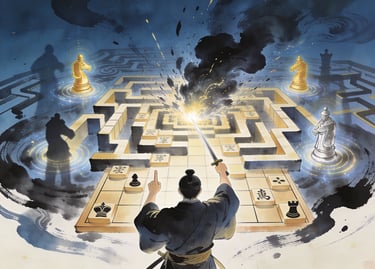
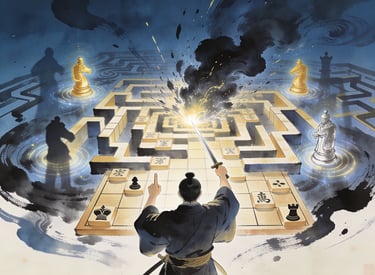
Checkmate
The name says everything. When this triggers, the game is over.
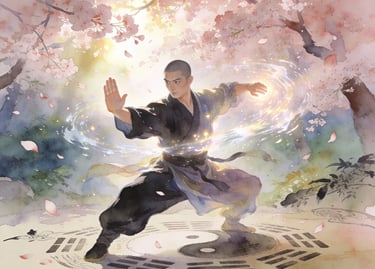
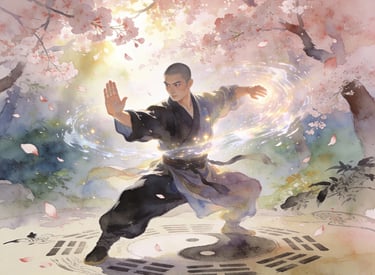
Zen Master
The philosopher-warrior who makes the Circle breathe.
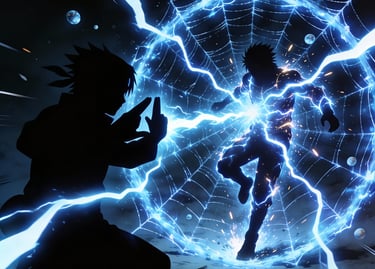
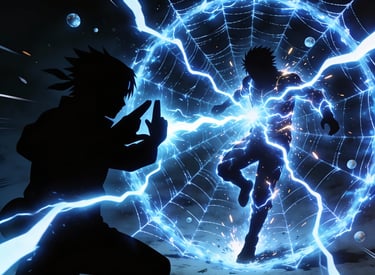
Circle of Infinite Decisions
A meditation formation that collapses possibility into a single, inevitable outcome.
THE ARTISTS - THE HANA-ZA
"The mask does not lie. It shows you only what you are ready to see."
The Hana-za were never meant to survive this long.
They started as a traveling theater company in the era before the Great Shogun's pact — wandering between villages, performing under oil-paper lanterns, charging what people could afford. They told the stories the world needed to hear. The ones about sacrifice. The ones about the price of victory. The ones where the hero does not always live to see the ending.
When the corruption came and the other factions scattered to fortify their borders, the Hana-za kept traveling. It turned out that art, real art, was something that could walk through a demon-infested forest and come out on the other side — because even demons pause to watch a performance.
Their techniques are a weapon forged from pure expression. The Kabuki Death-Arts — three sequential acts of increasing horror — are not techniques in the martial sense. They are performances. They have to be felt to be survived. Their painters draw lions from ink and the lions breathe. Their sculptors carve statues from spirit-stone and the statues stand guard. And at the center of it all is Ren — the one who sees three minutes ahead, who has already performed your death and knows every word of your final act.
In the game: Ink Artists are a combo faction. Build toward the Kabuki Death-Art sequence (Act 1 → Act 2 → Act 3) for an overwhelming chain of status effects. Supplement with Ink painting spells and the Sculptor's statue tokens to hold the board while the acts assemble.
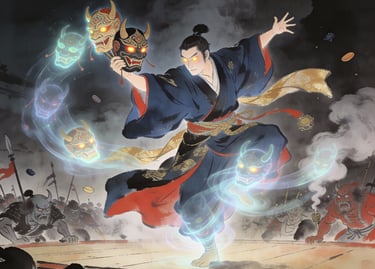
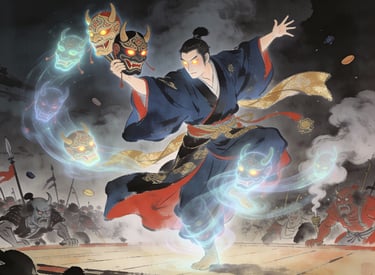
Star-Shadow Ren
Every face he wears tells a truth you fear. The soul of the Hana-za.
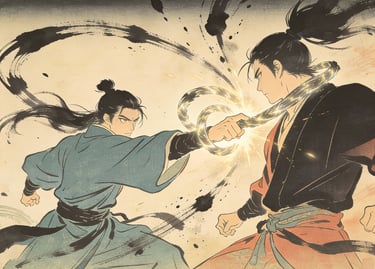
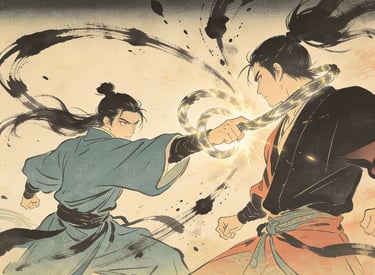
Ten-Phantasm Rift Blade
The final act. A thread of spirit-silk. A graceful pull. An end.
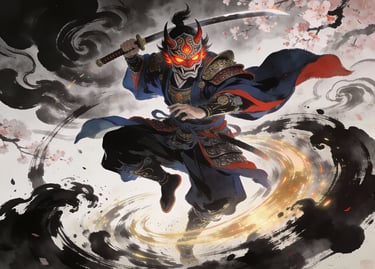
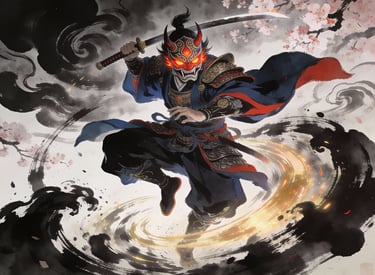
Ashigaru of the Rising Banner
Ren's companion. When the mask descends, the battlefield becomes his stage.
THE KAMI COURT
"We did not descend from heaven to save you. We descended to witness what you choose to become."
The kami have always been there. In the flame that does not burn the faithful. In the ocean that parts for the honest. In the thunder that strikes only what deserves to be struck. They did not intervene when the Great Shogun made his pact — because free will is the first and most sacred gift, and it cannot be taken back without destroying the one it was given to.
But they watch. They always watch.
Now the boundaries are breaking and the Kami Court has descended in full: Amaterasu, mother of dawnfire, whose warmth heals what fear has frozen. Tsukuyomi, silver judge of the full moon, who Silences corruption at the root. Susanno, the storm-breaker, who can part the sea with a single swing. Hachiman, heaven's marshal, whose eight banners represent every virtue a warrior can carry. The laughing Hotei, who has never carried a weapon and has never needed one.
They are not unified. The kami argue among themselves the way celestial bodies argue — by pulling in different directions, by the force of their contradicting natures. But when something in the mortal realm grows corrupt enough to draw their collective gaze, they are capable of responses that reshape landscapes. The Reign of Fivefold Fury. The Frozen Verdict. These are not spells. They are divine decisions.
In the game: The Kami Court is a high-curve powerhouse. Survive the early turns with Breath of the Returning Soul and the Petals of the Gentle Shield, then deploy your gods in sequence. Each kami is a statement. Together they are a judgment.
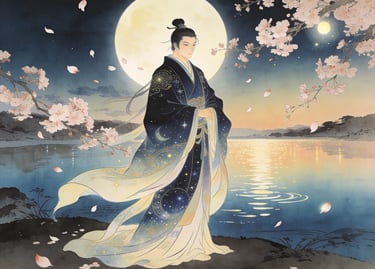
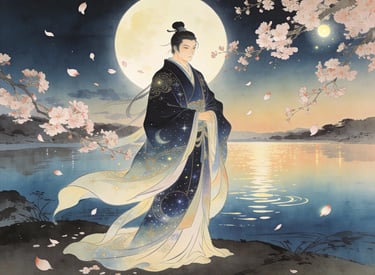
Moonlit Judge of Silver Night
Silence + a third ability. An immovable divine wall that stops opponent combos cold.
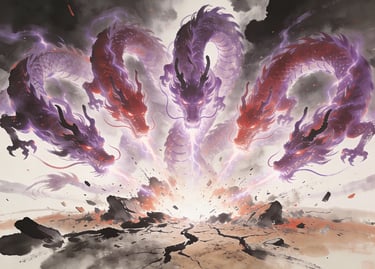
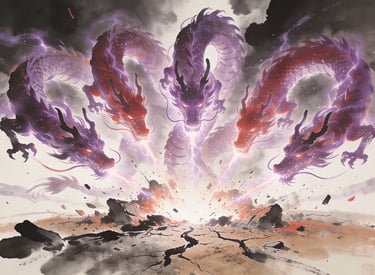
Reign of Fivefold Fury
Fire. Wind. Lightning. Shadow. Steel. Five dragons. One moment.
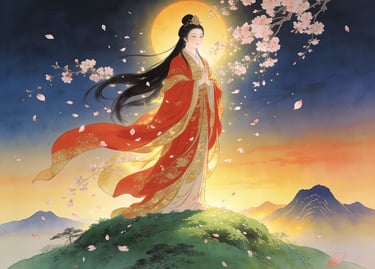
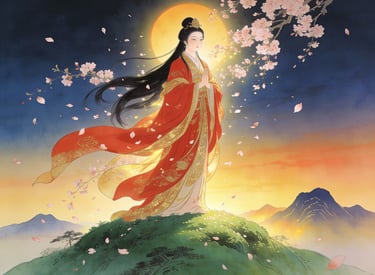
Mother of the Dawnfire
The warmth that births courage. A divine healer and spirit anchor.
THE DROWNED SHINOBI
"You cannot kill what has already become water."
No one knows when the Drowned Shinobi first appeared. That is, of course, exactly how they planned it.
They did not emerge from a single village or school. They surfaced gradually across the nine territories, always in the places where shadow met water — river deltas, rainy mountain passes, the narrow tide-alleys beneath harbor cities. By the time anyone thought to look for them, they had already been present for a generation. Moving through walls. Appearing from puddles. Leaving behind only the sound of water draining.
Their master, Kagekiri no Hanzo — shadow-cutter, legend-hunter, the man whose sword severs shadows themselves — is both their most visible member and their deepest mystery. He does not lead the Drowned Shinobi. He is what they aspire to be: the kind of fighter who solves a problem so completely that the problem's existence becomes a matter of historical record, not current concern.
Their techniques mirror their nature: Submerge Step lets them dissolve and reappear; Echo of the Living Self fractures a single will into many identical fighters; Legion of Shadow Forms fills the battlefield with perfect duplicates until the opponent cannot identify the real threat. They fight with water and shadow, fire shurikens and healing springs, tidal forces and precision kunai. They are not a school of thought. They are a school of inevitability.
In the game: The Drowned Shinobi overwhelm through numbers and misdirection. Echo of the Living Self and Legion of Shadow Forms can flood the board instantly. Use Healing Waters and Submerge Step to sustain and dodge removal while your clones apply unstoppable pressure.
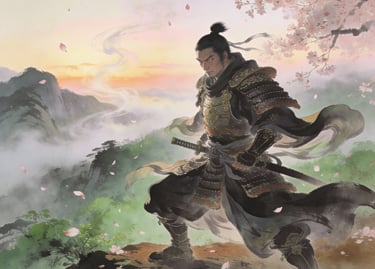
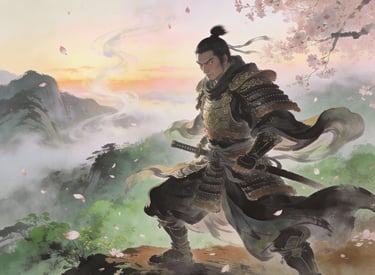
Kagekiri no Hanzo
The shadow-cutter. The legend. The face of the Drowned Shinobi.
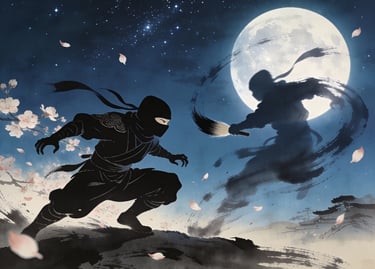
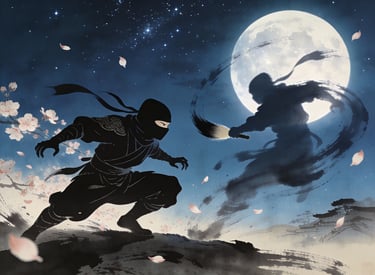
Legion of Shadow Forms
One warrior. A battlefield full of the same warrior. The opponent's nightmare.
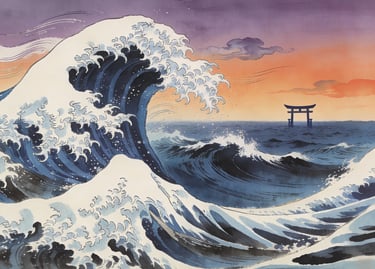
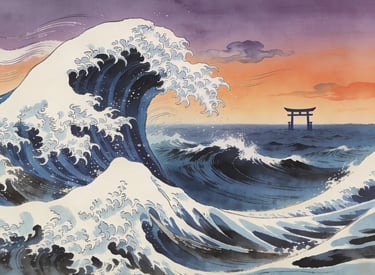
Crest of the World-Splitting Wave
The ocean deciding to move. The Drowned Shinobi's ultimate statement of power.
THE SAND PUPPET MASTERS
"My strings do not control them… they reveal who they truly are."
They do not march to war. They do not cry out battle cries or sharpen blades by firelight. In the wastes beyond the nine clan territories — where the sand has swallowed whole armies, whole histories, whole names — the Puppet Masters wait.
Three hundred years ago, when the Great Shogun tore open the boundary between life and the spirit plane, something leaked through that had no place in either world: the art of the Void Thread. Invisible strings woven from compressed desert wind, anchored to chakra, capable of moving any object — or any soul — the puppeteer chose. The first masters used them to animate sacred constructs for temple ceremonies. Their descendants use them to end duels before they begin.
Their warriors are not warriors. They are works of art: carved from demon-scorched wood and river-jade, draped in crimson silk and ember-chain, built to survive what flesh cannot. The puppeteers who command them are almost invisible — frail, quiet figures crouching behind the battle, ten invisible threads extending from each finger, conducting devastation like musicians conducting a dark symphony.
The sand is their second weapon. The desert remembers every soldier who died crossing it. The Puppet Masters learned to speak to that memory — to pull it upward in storms that strip stone, to pack it into coffins that bury the living, to breathe it into mirages that lead armies in circles until their water runs out.
You will not see them coming. You will see the puppet. By the time you realize the difference, the sand will already be rising.
In the game: Deploy your Puppeteer commanders first — protect them at all costs, as they are fragile. Use sand jutsu to trap, slow, and blind opponents while your puppet constructs absorb and deal damage. The clan rewards patience and board positioning. Sand control opens the lane; the puppets close it. A master-controlled field leaves the opponent fighting shadows until the real strike lands
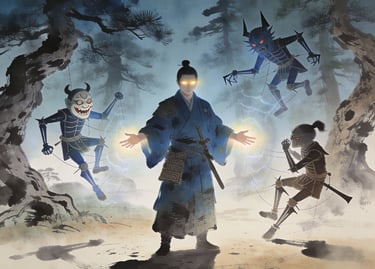
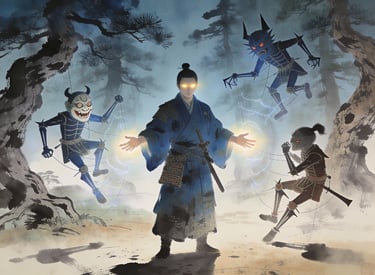
Thread-Master Yorinobu
The clan's legendary foundation. He is the conductor. Keep him alive and the orchestra plays. Lose him and the puppets go silent.
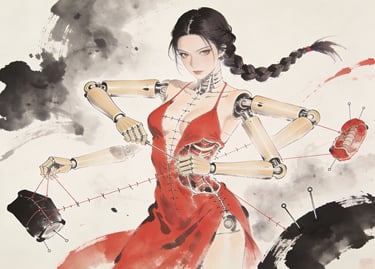
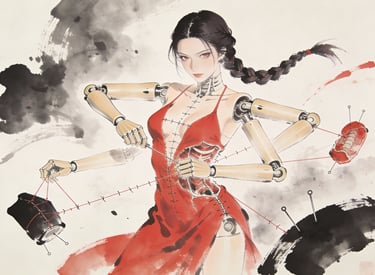
Puppet: Red Lady, Crimson-Cloth
Her silk conceals razor wires. Deployed by Yorinobu from range, she never stops moving
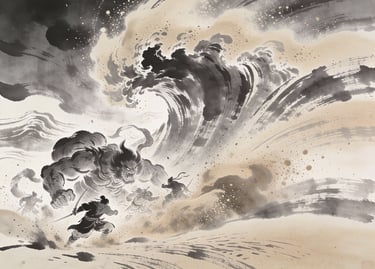
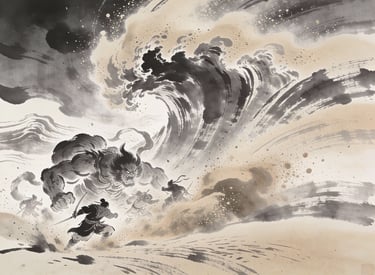
Grains of Final Judgment
Sand swirls around a target and judges them. Those found unworthy are buried alive
Predict the future by creating it
You didn’t come this far to stop
Strategy tips
1
Balance your deck with low, medium, and high-cost cards to ensure you have plays at every stage of the game.
2
Don't just focus on attack values. High defense cards can protect your position and force difficult decisions from your opponent.
3
Look for synergies between cards. Combining cards that enhance each other creates strategies greater than the sum of their parts.
4
Adapt your strategy based on your opponent's plays. Flexibility and tactical thinking win more games than rigid plans.
Ready to begin your journey?
Join thousands of players battling for honor. Download now and claim your place among the legends.
You didn’t come this far to stop